
BMW has just unveiled its brand-new logo, joining the growing list of automakers embracing flat design. Before BMW, both Volkswagen and Kia had already made similar moves, paving the way for this trend in the automotive industry. At this point, it feels inevitable—flat design is taking over. But why are so many car brands shifting in this direction?
BMW’s New Logo, A Closer Look
In case you haven’t seen it yet, here’s the new BMW logo:

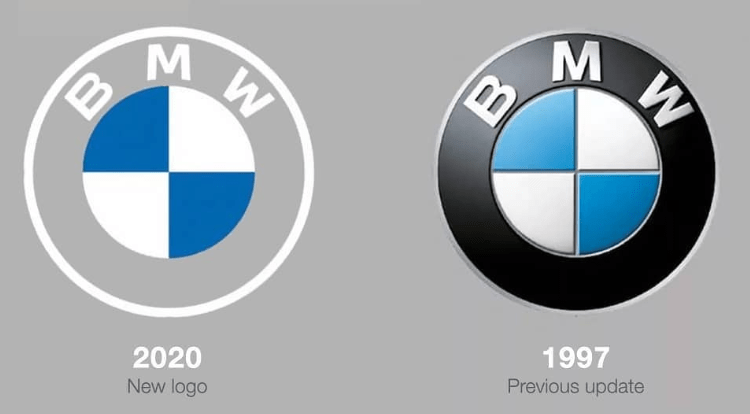
According to Creative Bloq, this marks BMW’s “most radical logo change in over 100 years.” So, what exactly has changed? Let’s break it down:
- Transparent Background – The iconic black outer ring is now gone, leaving a transparent gap.
- Refined Typography – The letters “BMW” maintain a bold and retro-inspired look, blending classic and modern aesthetics.
- Flat Design Over Skeuomorphism – The three-dimensional effect of the previous logo has been removed in favor of a minimalist, flat design.
A Trend in the Automotive Industry
BMW’s new emblem first appeared on the BMW i4 Concept, a next-generation electric vehicle. This move mirrors similar branding updates by Volkswagen and Kia, both of which embraced flat, modern aesthetics when unveiling their latest electric models.

Why now? Well, the future of mobility is electric, and legacy automakers are racing to reinvent themselves in an industry increasingly dominated by Tesla. A modern, digital-friendly identity helps these brands signal their forward-thinking approach to new technology, sustainability, and innovation.
Volkswagen introduced its simplified flat logo in 2019, revealing it alongside its new ID.3 electric vehicle. The change reflected VW’s commitment to electric mobility while making the logo more adaptable to digital interfaces. Kia followed in 2021 with a fresh new wordmark, shedding its oval badge in favor of a futuristic, continuous script. Now, BMW is making a similar statement, reinforcing its position in the evolving automotive landscape.

The Future of Automotive Branding
These logo redesigns aren’t just about aesthetics—they’re strategic moves aimed at shaping brand perception in a rapidly changing market. As electric vehicles become the new standard, car manufacturers must present themselves as innovative and cutting-edge. Design plays a crucial role in this transformation.


Tesla, the industry’s trendsetter, has established a high benchmark for modern automotive branding. Its sleek, minimalist approach has influenced not only car design but also how automakers present themselves visually. For brands like BMW, Volkswagen, and Kia, embracing flat design isn’t just about following a trend—it’s about staying competitive in an industry undergoing a fundamental shift.
So, will we see more automakers following suit? Most likely. As the competition in the EV space intensifies, expect more legacy brands to refresh their identities, aligning their visual language with the digital and electric age.
 /Log
/Log 